Sunday, July 14, 2013

From Dirty Paws and the Creatures of Snow

"Dirty Paws," Of Monsters and Men


Over the course of this pregnancy, many people have asked whether or not I've had dreams leading me to predict the gender of our baby. "I just knew I was carrying a girl," some will say. "I had pink-frosted cupcake dreams and could see the floral nursery before an ultrasound ever revealed the sex."

I've had exactly two pregnancy-related dreams. Neither, by any means, have exposed a sneak peek into the gender of our child.  Both, however, have managed to thoroughly freak me out and make me want to avoid dream-analysis at all costs. Window into my psyche or not; I think I'd prefer NOT to know the meaning behind these two illusions.

In the first dream, I gave birth to what I can only classify as a gremlin. The rat/bear/monkey hybrid leaped off the delivery table, scampered down the hospital corridor, and flung its horrifying body sideways up the wall. It finally stopped moving in the corner between the wall and ceiling, hovering bat-like against the white plaster. Being the ever-handy husband that he is, Tim "caught" the creature, swaddled it up in a baby blanket, and loaded it into the car. We took it home and proceeded to "care" for it until I woke up, confused and heart-thumping.

My second dream took place in the doctor's office, during a routine prenatal visit. "Congratulations!" my doctor announced excitedly, re-entering the room clutching my hospital charts (which, as a sidenote, do not actually exist anymore as everything is now digitized). "You're pregnant again!" Clearly, my look of confusion prompted him to continue. "This is not uncommon. It's what's known as an Overlap Pregnancy. You'll give birth to your first baby in a few months, and then a few months later you'll give birth to the second."

I have no idea how to interpret either of these scenarios. Furthermore, I have absolutely zero inclination as to whether we are about to have a son or a daughter (let's hope my Mother's Intuition kicks in once baby is here). Regardless, Tim and I could not be more excited about the impending adventure, and are counting the days until we get to meet our little boy or girl. Or gremlin.

Tuesday, April 30, 2013

Guess I'll Just Close My Eyes

"Say it Ain't So," Weezer

Every year before reading the most famous novel in the world with my high school juniors, I used to give background information about F. Scott Fitzgerald, the 1920s, and the novel itself. Most kids had some idea of prohibition and Al Capone; flapper dresses and the “Roarin’ 20s.” The actual plot of The Great Gatsby, though cleverly drawn out and climatic, wasn’t anything they hadn’t heard before, I’d tell them. Sure, in the 1920s, a novel that included murder, suicide, underground mob activity, and cheating spouses was certainly a novelty. However, let’s face it: most of my students, by 17, had seen FAR more violence and gratuitousness on television, in the movies, and for some, unfortunately, in their real lives. I’m pretty confident it isn’t the simple plot content that keeps Gatsby in constant circulation among American classrooms. Furthermore, though my teaching focus DID contain quite a bit of exploration regarding the idea of the American dream, the ability (or inability) to conjure the past, and the danger of inexorably high expectations, I am convinced one of the biggest reasons high school English teachers keep returning to this particular text has much to do with Fitzgerald’s language itself. I know this isn’t the first time I’ve used this space to praise his writing brilliance, but no matter how I phrase it, I don’t know that there’s any way to do Fitzgerald justice. He truly had a magnificent ability to interweave symbolism, sensory imagery, and perfectly subtle parallels.

As fans of Fitzgerald know, he led a short and troubled life. Portions of The Great Gatsby must be autobiographical, although more so in the details than in the larger character actions. Fitzgerald wanted Gatsby to be perfect, and spent a good deal of time proposing and considering a variety of titles before he settled, somewhat unsettlingly, on The Great Gatsby. Not surprisingly, then, he was also adamant that the cover be more than just ordinary. The original cover art was completed by Spanish artist Francis Cugat, ironically before Fitzgerald had even written the novel’s final words. Fitzgerald purposely included subtle allusions to the cover throughout his prized text. As bold moves often do, the cover choice initially garnered a variety of mixed emotions, including Ernest Hemingway’s loud distaste (now immortalized in his A Moveable Feast).

Whether homage to Dr. T.J. Eckleberg, Coney Island, or Daisy herself (the “girl whose disembodied face floated along the dark cornices and blinding signs” of New York), Gatsby’s original cover art is both beautiful and unique. Saturated in symbolism, it’s too important-- too intentional-- to even consider NOT including as the image gracing the cover. The idea that alternate versions exist-- that artists and publishers in subsequent years have deemed themselves worthy to discount and replace something so hauntingly meaningful and perfect already-- is irritating to say the least. Therefore, when I found out about the latest cover (based entirely on the most recent film adaptation and plastered with Leonardo DiCaprio's handsome albeit completely unnecessary face), my heart sank for a second. Replacing Cugat's cover with another artistic creation is one thing-- stupid, yes; but also hopefully well-intentioned and at least somewhat creative. But a posed picture from a movie? Please. While not quite as bad as the scholars idiots who attempt, year after year, to have the n-word omitted from Huck Finn, there is a part of me that views this new cover as a skewed form of censorship. I used to spend over an hour analyzing, discussing, and writing about the cover art with my 11th graders...the color scheme, the number of tears, the muddled lights, the female nudes basking in the center of the intentionally drooping irises...how could you not stop for a second to appreciate and interpret the intricacies that exist in the piece?

I have a huge and hand-painted replica of the original Gatsby cover framed in my bedroom (a gift created by a former student!) as a daily reminder of the power Fitzgerald's words. Regardless of the fact it's due to the movie's concurrent release, I am undoubtedly thrilled to hear The Great Gatsby may very well be one of the top-selling books of 2013: it says a hell of a lot more about American culture and society than last year's embarrassing 50 Shades of Grey debacle. Yet despite that, it's hard to swallow a new and movie-based cover enveloping one of the greatest staples of American literature, especially one whose original "wrapping" is so specific and time-honored. Changing the packaging doesn't change the content, therefore publishers do potential new (and old!) fans a disservice by disguising the product. Perhaps, though, it's fate's timely way of ironically demonstrating one of Gatsby's themes: flashiness and novelty and wealth, despite all kinds of evidence to the contrary, are fantastically successful forms of bait. Only, in the case of purchasing the flashy new book, the end-prize will most certainly NOT be fleeting or empty-- a promise that, unfortunately, can't be said for Fitzgerald's characters.


Wednesday, April 17, 2013

Mend the Heart from the Sea and the Sand

"Sunshine," Matisyahu

On Monday of this week, I taught a social studies lesson. Because I teach 5th grade, I teach American history...lucky for me, considering it's the history I'm most drawn to. Reading about Christopher Columbus, Thomas Jefferson, the Bill of Rights, the First Continental Congress, the Boston Tea Party...it's hard not to feel a surge of respect and patriotism, a rooting of rebellion towards the original colonists. Despite everything--everything--, there is a lot of good here-- good people, good places, good intentions, good acts, good food, good life-- that makes it hard not to be proud to be an American.

On Monday of this week, I taught a social studies lesson. My students learned about the events leading up to July 4th, 1776-- the day the colonists officially declared independence from Great Britain. We ended the lesson reading about Paul Revere's ride ("The British are coming!" my students chanted) and the "shot heard 'round the world," which began the Battles of Lexington and Concord and, ultimately, the American Revolution. 

"No one knows who fired that shot," I told my class. "We aren't sure whether it was a colonist or a British solider. What we do know is that it started a battle that led to a revolution that ultimately gave our country its independence."

*          *          *          *

On Monday of this week, our country celebrated Patriot's Day, a day that commemorates the Battles of Lexington and Concord. The celebration itself is a little bit of a conundrum, because in some ways the recognition memorializes death and violence and war. But in others, the observance pays tribute to a necessary type of rebellion, a revolt that brought our country its voice and its freedom. And while I understand the roots of this country stem from violent rebellion, it's hard to explain that to a class of 10-and-11-year-olds. Young and full of mixed emotions due to muddled messages regarding weapons and gun laws in the wake of recent events, my class is full of children who believe war is bad and guns are bad and why do we celebrate a battle where lots of people died? Violence is a scary thing, especially in today's society, and it's an especially tricky thing to explain to children. 

On Monday of this week, in a city as celebrated and as American as they come, an act of horrific violence swept the streets of Boston. The act killed three, physically injured hundreds, and sent millions across the country into an emotional upheaval of horror, sickness, and questioning faith. In the face of such an unsettling and indescribable tragedy, it's hard to find goodness and light and conviction. And yet, despite everything, Americans rallied across the country to stand together in a time where hundreds felt broken and lost. Athletes, having finished their own marathons mere minutes before, continued running to hospitals to donate their own blood. People donated rooms, rides, and couches to strangers. Restaurants donated food, water, and places of refuge.

On Monday of this week, I was reminded, yet again, of the disgustingly inhumane actions some people are capable of carrying out. My heart was heavy trying to even fathom the sadness, anger, and disbelief faced by thousands. But despite everything--everything--, I was reminded of something that transcended the revulsion and cowardice of the bombings. On Monday of this week, I was reminded, yet again, of the indelible power that is the human spirit. Americans--especially Bostonians-- are a gritty and hearty people whose capacities extend much deeper than terrorism. We are a people whose roots lie in standing up for each other, uniting in the face of unfairness, and banding together for a brighter future in spite of every atrocity or roadblock that might stand in the way.

On Monday of this week, I was reminded, yet again, that despite everything--everything--, I'm still so proud to call this country mine.

And it happened again tonight, watching the Boston Bruins resume their season with this opening national anthem:


“I like to see a man proud of the place in which he lives.  
I like to see a man live so that his place will be proud of him.”
-Abraham Lincoln

Sunday, March 10, 2013

We Belong in This Forever

"A Matter of Time," The Killers

Sometimes in the midst of some really, really good months, you just get tossed a few of those less-than-stellar weeks. Those kind of weeks that are achingly overwhelming. That prove the age-old cliche: 24 are just not enough hours to cover all of it. That there is such a thing as a breaking point, and reaching it more than once in a day is not, in fact, impossible. The kind of days, weeks that aren't beautifully cured by Van Morrison and a glass of wine; a good book and a 20 dollar bill surprisingly retrieved from the back pocket of last year's jeans.

The Killers have an awesome song (The Killers have dozens of awesome songs) called "A Dustland Fairytale," and in it Brandon Flowers bemoans, "Moon River, what'd you do to me?" Because...right?! "Dream maker...you heart breaker...wherever you're going, I'm going your way." But...what about the times I'm not? What if (when) it inevitably turns out I don't want to go your way, and instead stubbornness or principle override compromise? What then, Andy Williams? Two drifters, in theory, off to see the world is a nice little picturesque dream, but the reality is that responsibility and money and foundation and stability have to come into play at some point. (And as a side note, does the word drifter really have that great of a connotation, anyway?)

More often than not, these kind of days present a delicate kind of clarity, as they invariably provoke both conversation and reflection-- maybe painful, maybe touching, always honest, definitely necessary. Because some of the beauty really is in the contradiction and the cracks. The hardware and armor created and needed to sustain a lasting relationship are built just as much from the arguments and the confusion as they are from the celebrations and successes. Because isn't it true that in order for anything to really know it's worth, it must first be proven that the thing itself can break?

Whether we want to admit it or not, life is messy. Sometimes we get let down, and people or ideas or situations don't meet our expectations. Sometimes our expectations are unrealistic or unfair, and we allow ourselves to believe it's not our fault anyway. Deflecting blame is so easy. But then, in one of those compulsory moments of self-reflection, we're able to actually peek inside our own selves for a bit-- stir around in that little autonomous pool and actually think about motives and reactions. And I'm reminded how imperfect and flawed my own words and responses; motive and reactions are.

And then, like always, the not-so-good days are fleeting and over. We spend hours talking and laughing. And laying in bed listening to so much good music, and he suddenly he says he knows the song for the baby. And he plays it, loud.


Be still
Wild and young
Long may your innocence reign
Like shells on the shore
And may your limits be unknown
And may your efforts be your own

In sickness and in health. In good times and in bad. In joy as well as in sorrow. How lucky am I are we?

I was born to catch dragons in their dens
And pick flowers
To tell tales and laugh away the morning
To drift and dream like a lazy stream
And walk barefoot across sunshine days.
 
...

I was born to love a man wrapped in sunshine
And dressed in fog
To make a pact on a high hill
Ratified centuries ago by the sun
To walk together through sunshine days and foggy nights.
 
-James Kavanaugh

Thursday, November 1, 2012

Block Rockin' Beats

The Chemical Brothers

My favorites of 2010, favorites of 2011, and now my top ten twelve favorite albums of 2012. Just so much good stuff:

1. Muse: The 2nd Law
Favorite Songs: "Explorers," "Big Freeze," and "Panic Station"


2. John Mayer: Born and Raised
Favorite Songs: "Queen of California," "Born and Raised," and "A Face to Call Home"


3. Kendrick Lamar: good kid, m.A.A.d. city
Favorite Songs: "Sing About Me, I'm Dying of Thirst" and "m.A.A.d. city"


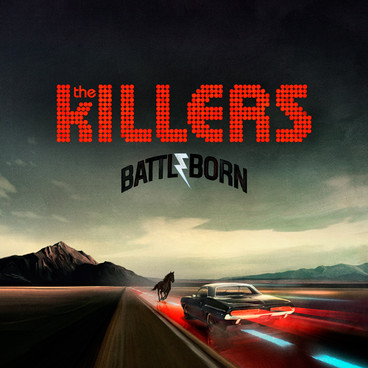
4. The Killers: Battle Born 
Favorite Songs: "Battle Born, "Here With Me," and "Runaways"


5. The Lumineers: The Lumineers
Favorite Songs: "Ho Hey" and "Stubborn Love"


6. The Shins: Port of Morrow
Favorite Songs: "Simple Song," "40 Mark Strasse," and "Pariah King"


7. Swedish House Mafia: Until Now
Favorite Songs: "Beating of My Heart," "You Got the Love," and "In My Mind"


8. Of Monsters and Men: My Head is an Animal
Favorite Songs: "Mountain Sound" and "Little Talks"


9. The Smashing Pumpkins: Oceania
Favorite Songs: "One Diamond, One Heart" and "Pinwheels"


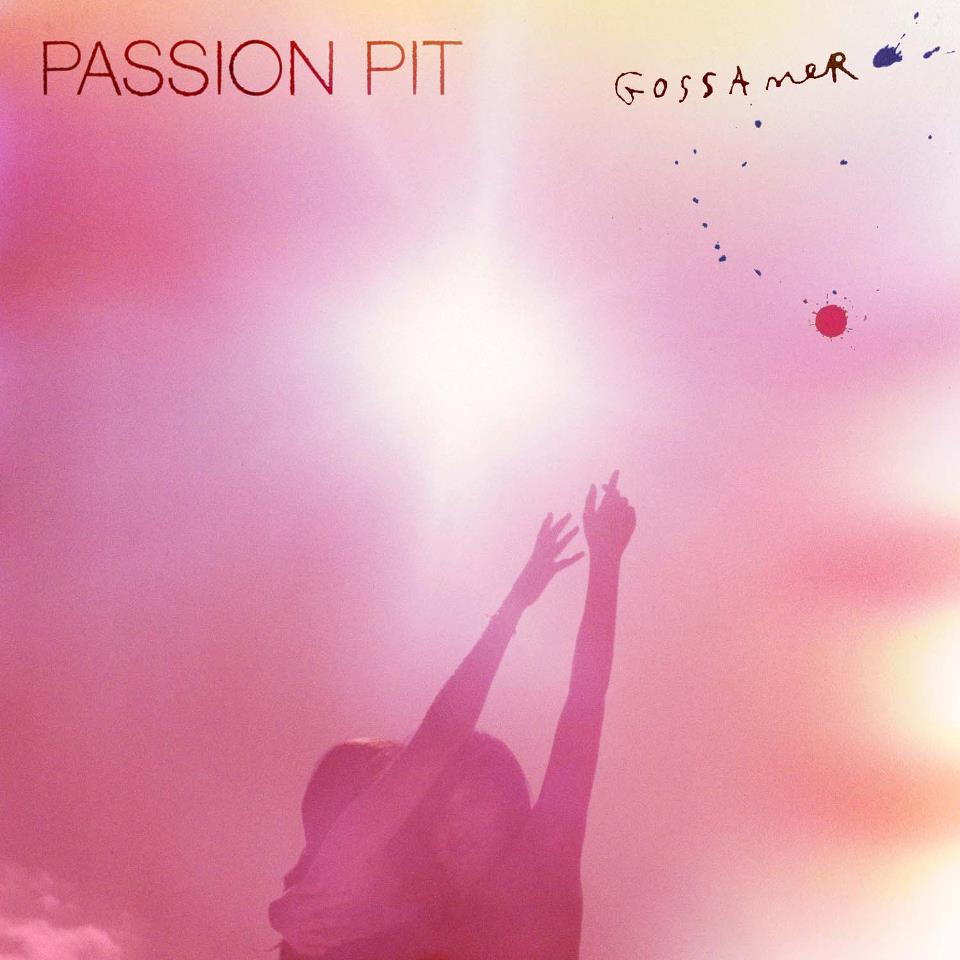
10.  Passion Pit: Gossamer
Favorite Songs: "Carried Away," "Take a Walk," and "Cry Like a Ghost"


11. Imagine Dragons: Continued Silence
Favorite Songs: "Demons," "It's Time," and "On Top of the World"


12. Edward Sharpe and the Magnetic Zeros: Here
Favorite Songs: "Man on Fire," "One Love to Another," and "That's What's Up"

Monday, October 15, 2012

The Privilege is Mine

"There is A Light that Never Goes Out," The Smiths

"I hate reading," my defiant, angry, lost, confused, lonely students said.

"I just don't get into books."

"There are so many other things I could be doing."

"Reading is just....lame."

So many arguments, stemming from a similar place. So many furrowed brows, crossed arms, made-up minds. Kids who believed English wasn't for them, and this would be another class to sit through. Another place to wait for the bell to ring; to tick away minutes. A place to warm a seat and stare ahead, quietly sliding under the radar and letting another worthless high school day idle by.

Sometimes Gatsby was enough to pull them out of the fog. A verity of silly, over-dramatized voices. A soap-opera-saga in print; a high school fairytale gone wrong. The bleak outcome of an otherwise perfect leader; the perfect irony of perfection that never quite was. Other times, Catcher pulled them from the dark abyss, and Holden became the hero to grasp at, learn from, emulate. His intellect captivating; his drawn lies compelling enough to listen to. Still other times, Poe's edge and craze and madness was enough to relate; to breathe and soak in. A heavy load to carry, but not alone. Poe gets it, they'd reason. His life suckedBeen there, dude.

But sometimes, none of that could do it. Classics may they be, the characters were a little outdated...unrelatable...stale. How can I see Daisy as a rebel, they said, when she hasn't even done anything really that bad? You think Holden would be my friend, they'd argue, when he doesn't even swear?

And I'd get it. Perhaps not entirely, but still. Abuse, drugs, pregnancy, loss, divorce, death, alienation, suicide, depression...all very real hurdles in the painful lives of some of my teens. And as much as I loved (love!) Jay Gatsby's tragic demise and Sam Hamilton's award-winning speeches, it wasn't enough for those kids. Because some kids needed a grittier hero. A character to look up to whose life was shaken and scarred; imperfect and mangled. A protagonist who didn't always quite fit that title; whose words and actions and motives were sometimes off or wrong or ill-intentioned. A character who didn't hit the home run or ace the SATs or become student council representative...but who was okay anyway. A character who made it, barely, and came out on the other side with enough voice and reason to be alive.

For those special kids, I recommended The Perks of Being a Wallflower.

Because sometimes artistic cinema gets it right, the novel was released as a film recently, and I had the chance to see it last night. The novel's author, Stephen Chbosky, also wrote the screenplay and adapted the film, which is most certainly the reason the movie version plays as well as it does. I haven't read the the novel in over five years, yet last night's film brought every sentence back into my mind like whiplash, plummeting the perfectly placed teenage anguish and despair back into the forefront of my brain. As devastatingly genuine as much of the film's content is, I couldn't help but think back to the number of students who had claimed they'd been "saved," in one way or another, by Chbosky's tale.

"You shouldn't let the kids read that," one particular colleague said.

"It's pretty graphic," said another.

"Raw."

"Inappropriate. Entirely."

But my team-teacher and I did. With parent permission after a detailed account of the book's contents, of course, but still. Because in all honesty, the content in the novel, in many cases, didn't hold a finger to the life events encompassing my students who needed the book the most. And (some) inappropriate content aside, it's hard to tell a kid to stop reading.

And I'll never regret it. This week alone, I've received almost a dozen emails from former students, claiming the long-lasting effect of the novel have re-washed over them since the release of the movie.

"It was my favorite book, ever," she wrote.

"I'm so thankful you gave me a copy."

"I've read it four times since my junior year, and every time something new is there."

"That book saved my life."

                                  *                *                *                *                *                *

It is one of my deepest hopes that books continue to have a profound effect on me until my deathbed. I hope I will forever find titles that challenge my views and force me to see things in a different way. To remind me that I'm not alone; to convince me the world is a bigger place than I sometimes feel it is. But in this moment, I hope that Charlie and his friends continue to change and help and save the lives of teenagers all the time; every day.

"Sometimes, I look outside, and I think that a lot of other people have seen this snow before. Just like I think that a lot of other people have read those books before. And listened to those songs. I wonder how they feel tonight." 

"I walk around the school hallways and look at the people. I look at the teachers and wonder why they're here. If they like their jobs. Or us. And I wonder how smart they were when they were fifteen. Not in a mean way. In a curious way. It's like looking at all the students and wondering who's had their heart broken that day, and how they are able to cope with having three quizzes and a book report due on top of that. Or wondering who did the heart breaking. And wondering why."

"So I guess we are who we are for a lot of reasons. And maybe we'll never know most of them. But even if we don't have the power to choose where we come from, we can still choose where we go from there. We can still do things. And we can try to feel okay about them." 

"We were just there together. And that was enough."

Love Always, Charlie

Sunday, June 17, 2012

Today My Heart Swings

"The Heinrich Maneuver," Interpol

"What's a pendulum?" one of my students asked, looking ahead from where we had left off in the science book. "I like that word. It's cool."

"Pendulums are cool," I said. "It's basically a weight that hangs from a string. The weight is actually called a 'bob.' If you pull the bob to one side, it will swing back and forth until it eventually rests back at its center. What do you think eventually makes it stop swinging?"

"Gravity!" another called out proudly.

"Exactly! And you know who discovered the pendulum? Galileo. Remember when we talked about him?"

"Yeah. That guy with the huge beard."


          *          *          *          *          *          *          *          *          *          *          *          *

On Friday, I found out that, come August, I will officially begin a brand new teaching chapter of my life: Upper Elementary School. I am overwhelmingly excited, and absolutely could not be genuinely happier with the prospect of what's to come. I know this upcoming school year will be a wonderfully crazy whirlwind of chaotic organization and elementary bliss. I feel honored and lucky and ready.

It seems fitting then, that the night before I received this news, I attended Carlsbad High School's graduation. While I did teach one class of sophomores last year, 4 out of my 5 classes were 11th graders, and therefore members of the class of 2012. Friday morning interview or not, I wasn't about to miss watching this extraordinary group cross the stage and receive their diplomas. 

Being back on the Carlsbad campus was, in a word, bittersweet. According to the online dictionary, the definition of bittersweet is "pleasant but tinged with sadness," which is a spot-on way to describe how it felt to walk the eerily familiar halls of the 3000 building and peer through the windows of my former classroom. My logical mind, of course, understood why the colorful Lit. Circles posters no longer adorned the white walls, why the powerful East of Eden quotes didn't shine on the back whiteboards, and why the Lord of the Flies projects no longer grazed the ceiling on top of the storage cabinets. Nevertheless, I won't deny the tug on my heartstrings that escaped when I was offered visual proof of their non-existence. Later, sitting in the audience in anticipation offered a similar feeling of nostalgia. The culmination of hundreds and hundreds of hours of lectures and projects and chemistry labs and late nights and analysis and scientific calculators and prom dresses and let downs and field trips and broken hearts and first kisses and PowerPoint presentations and school plays and essays and and and was culminating in this; the glorious feeling of a high school graduation ceremony. A symbol of accomplishment; a closed chapter; a new, fresh start in the great big world of Real Life. And as I sat there, I'm certain I know why this one hit so close to home for me: While I absolutely am not certain what the future holds, there is a very real chance that I will never teach high school English again. For years, Steinbeck and Twain, Poe and Whitman, Thoreau and Angelou, Plath and Salinger were all the keynote speakers of my life, exploding off of pages and into ready hearts and minds. As my former students turned their tassels and closed a pivotal chapter in their lives, I may have very well been doing the same. And while change and transformation are expected and healthy and necessary, it doesn't change the fact they're also hard.

When you're a teacher, you're offered the rare chance to see life, every day, through the eyes of a variety of young people. Most of the time, their perspectives and perceptions haven't been marred or tainted by too much exposure to the atrocities and realities of the world, and instead they believe in luck and fairness and magic. Perhaps this is part of the reason that it's easy to love this profession-- whether we like it or not, we're surrounded by individuals who, more so than most anyone, sincerely believe in Possibility and Making a Difference and Brighter Tomorrows. It calls to mind for me, always, a passage from Robert McCammon's Boy's Life:

You know, I do believe in magic. I was born and raised in a magic time, in a magic town, among magicians. Oh, most everybody else didn’t realize we lived in that web of magic, connected by silver filaments of chance and circumstance. But I knew it all along. When I was twelve years old, the world was my magic lantern, and by its green spirit glow I saw the past, the present and into the future. You probably did too; you just don’t recall it. See, this is my opinion: we all start out knowing magic. We are born with whirlwinds, forest fires, and comets inside us. We are born able to sing to birds and read the clouds and see our destiny in grains of sand. But then we get the magic educated right out of our souls. We get it churched out, spanked out, washed out, and combed out. We get put on the straight and narrow and told to be responsible. Told to act our age. Told to grow up, for God’s sake. And you know why we were told that? Because the people doing the telling were afraid of our wildness and youth, and because the magic we knew made them ashamed and sad of what they’d allowed to wither in themselves.
After you go so far away from it, though, you can’t really get it back. You can have seconds of it. Just seconds of knowing and remembering. When people get weepy at movies, it’s because in that dark theater the golden pool of magic is touched, just briefly. Then they come out into the hard sun of logic and reason again and it dries up, and they’re left feeling a little heartsad and not knowing why. When a song stirs a memory, when motes of dust turning in a shaft of light take your attention from the world, when you listen to a train passing on a track at night in the distance and wonder where it might be going, you step beyond who you are and where you are. For the briefest of instants, you have stepped into the magic realm.
So today, armed with my own version of a magic lantern and--without any doubt in my mind--afoot in a magic town, I set out into this next official chapter of my professional life. I willingly (excitedly!) trade gothic poetry for Tuck Everlasting. Anticipating the Opposition paragraphs for photosynthesis. The Great Gatsby for the Math Superbowl. Whether 11th grader or 5th grader, teacher or student, adult or child, each one of us is, above all else, human...born with "whirlwinds, forest fires, and comets inside us." How lucky am I, then, to be appointed the job of doing my damndest to prohibit those things from withering in the human spirit?

Life is a pendulum. Constantly in motion and centered around an invisible force much greater than ourselves. Sometimes it pulls us in one direction, and other times-- sometimes when we don't even see it coming-- it pulls us in another entirely, swinging us out of our comfort zones and blindly into the unknown. Never too far, but still far enough for us to catch our breaths and wonder at the sight of unfamiliarity and unexpected enchanted moments. And yet, always, we're forever brought back to center by that invisible and inescapable force--of fate, of faith, of coincidence...or maybe, even of magic: that inevitable foundation that offers support and, ultimately, guides us home.